
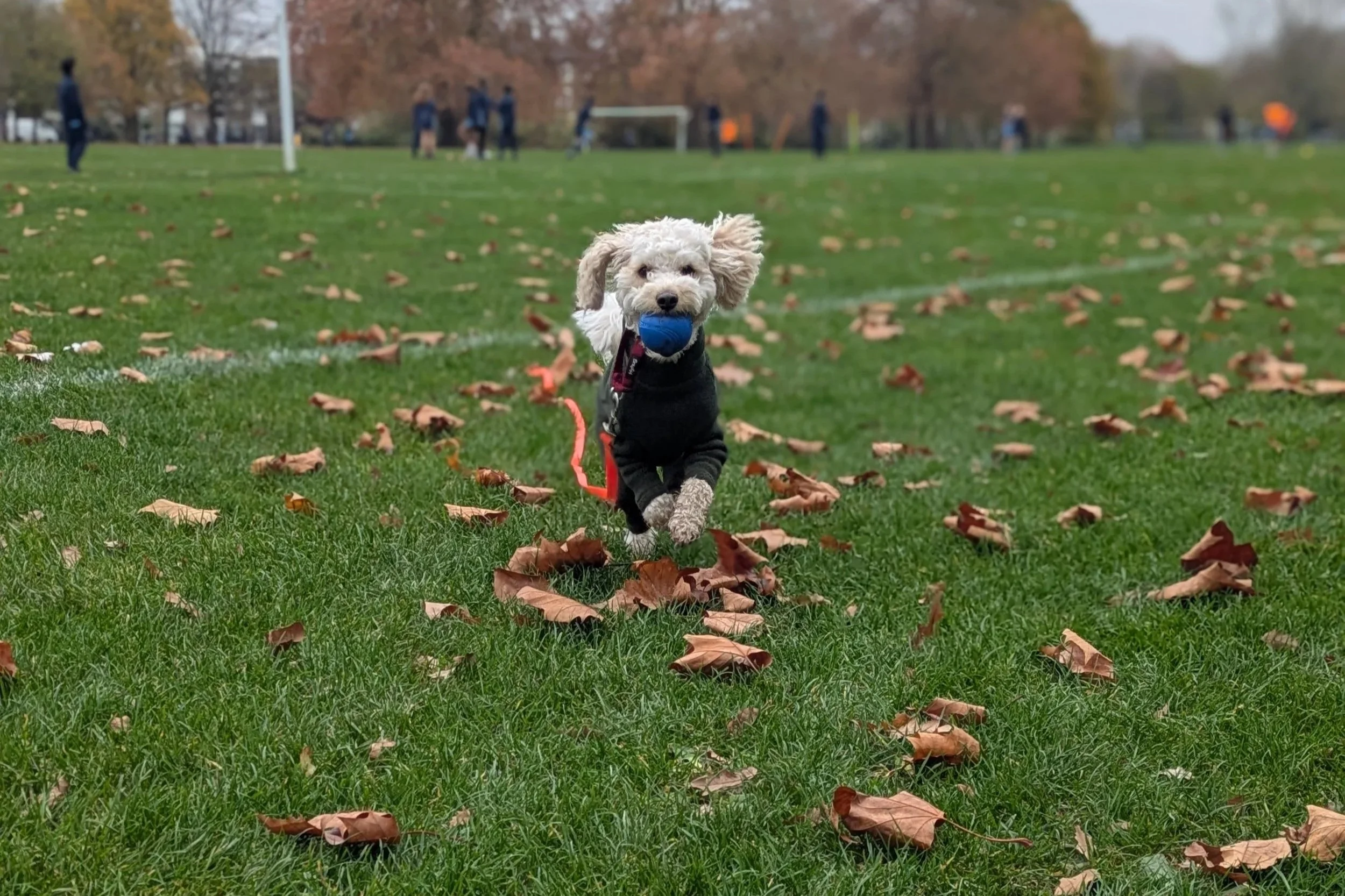
Teaching “Drop” Without a Fight
Teach your dog to drop toys on cue without stress using simple swap games, rewards, and timing. Perfect for puppies and adult dogs—even in busy `Clapham Common.
Most people try to take things off their dog. That’s usually where it goes wrong. If your dog thinks you’re going to grab what they’ve got, they’ll:
run off
hold on tighter
or turn it into a game you don’t want
So instead—you make dropping the item worth it.
Start With Two Identical Objects
Use two of the same toy (balls work best). You’re not taking things away. You’re teaching a clean swap.“ Teaching drop works best when you get timing and confidence right—book a session to learn exactly how.”
How the Game Works
Give your puppy one ball
Have a second identical ball in your hand
Keep a third (squeaky) ball in your pocket
Now:
Let them hold the ball
Squeak the one in your pocket
They drop what they have
Immediately give them the ball in your hand
No delay. No reaching for their mouth.
Add the Word “Drop”
Once they’re consistently letting go:
Squeak
Say “drop”
They release
You reward straight away
Keep it tight and well-timed.
Add Food (This Is Where It Gets Better)
Once the game is clear, layer in food.
Dog drops the ball
You reward with food immediately
While they’re eating, you calmly pick the ball up
Then restart the game
This does two things:
Stops them from starting guarding the object
Teaches them that giving things up leads to more, not less
Why This Works
You’re flipping the script.
Instead of:
👉 “human takes things away”
Your dog learns:
👉 “when I let go, I win”
That’s what makes “drop” reliable—even outside.
Practise Where It Matters
Start at home, then take it into real environments like Clapham Common.
That’s where most dogs struggle—and where this approach actually pays off.
Final Thought
A solid “drop” isn’t about control. It’s about trust and timing. Get that right, and your dog won’t just let go—they’ll do it without hesitation. A solid drop sets the foundation for safe walks and play—book a session to practise with expert guidance.”. Teaching drop is part of the broader system and helps you while you are working on socialisation and coming across objects your puppy may pick up—learn more about building that confidence in our Puppy Socialisation guide.
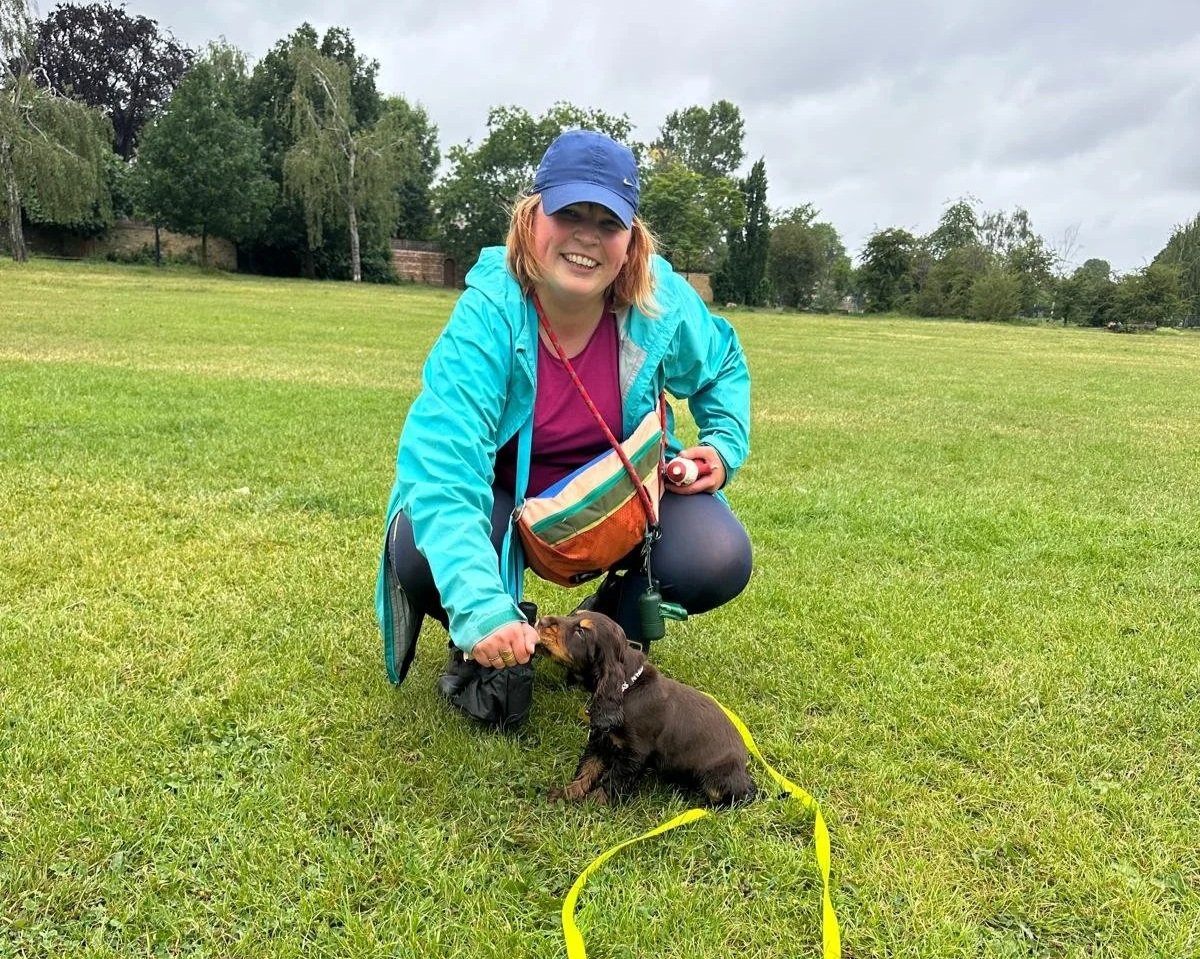
The 3-Second Recall (That Actually Works in Wandsworth Common)
If your dog doesn’t come back, it’s not stubbornness—it’s just that the world feels more rewarding. Recall starts with staying relevant. Use movement, reward the right choices, and build value in being near you. With the right approach, recall becomes something your dog wants to do, not something you have to force.
If you’ve ever let your dog off lead and thought,
“they’ll come back…”
…and they didn’t—this is for you.Recall doesn’t fail because your dog is stubborn.
It fails because, out here, you’re just not that interesting yet. And in a place like Wandsworth Common, you’re competing with everything.
Start here (before you trust recall)
If your puppy is new to the common, don’t go straight to off-lead. Use a training line (around 5 metres). It gives them freedom—but keeps you relevant. More importantly, it lets you actually teach recall properly, instead of hoping for it. If you’re doing puppy training in Wandsworth, this step matters more than anything else. If your puppy struggles to come back even in a quiet park, a personalised session can help you get it right.
The mistake most people make
They stand still.
They call the dog.
They repeat it louder.
Meanwhile, the dog’s thinking:
“Why would I come back? Nothing’s happening over there.”
What to do instead
Move.
That’s it.
Walk with purpose. Then, at random moments, turn and move away from your dog—even jog if you can. Work backwards facing the puppy and the second your dog notices and comes toward you:
say “yes”
reward straight away
No delay. No overthinking.
You’re building one clear idea:
👉 being near you pays off
Why this works (especially in London)
Dogs are wired to follow movement. When you stand still, you fade into the background. When you move, you become relevant again. In busy places like Wandsworth Common, that’s everything. This is the kind of thing that actually works in real life—not just in a quiet training field.
Don’t aim for control
Aim for choice. A good recall isn’t a dog that has to come back.
It’s a dog that wants to. That’s what makes it reliable.
If your dog already ignores you
That’s normal. It just means they’ve learned that everything else is more rewarding. You don’t fix that by shouting louder—you fix it by changing what coming back means. That’s exactly what we focus on in our dog training in Wandsworth sessions.
Final thought
If you want a dog that comes back quickly, don’t start with commands.
Start with:
movement
timing
rewarding the right choices
Do that consistently, and recall stops being a gamble. Build reliable recall from day one—book a session to get hands-on guidance for your puppy or adult dog.
Before your puppy reliably comes when called, it helps if they are already learning calm engagement on walks. Check out our Loose Lead Walking guide for step-by-step techniques.
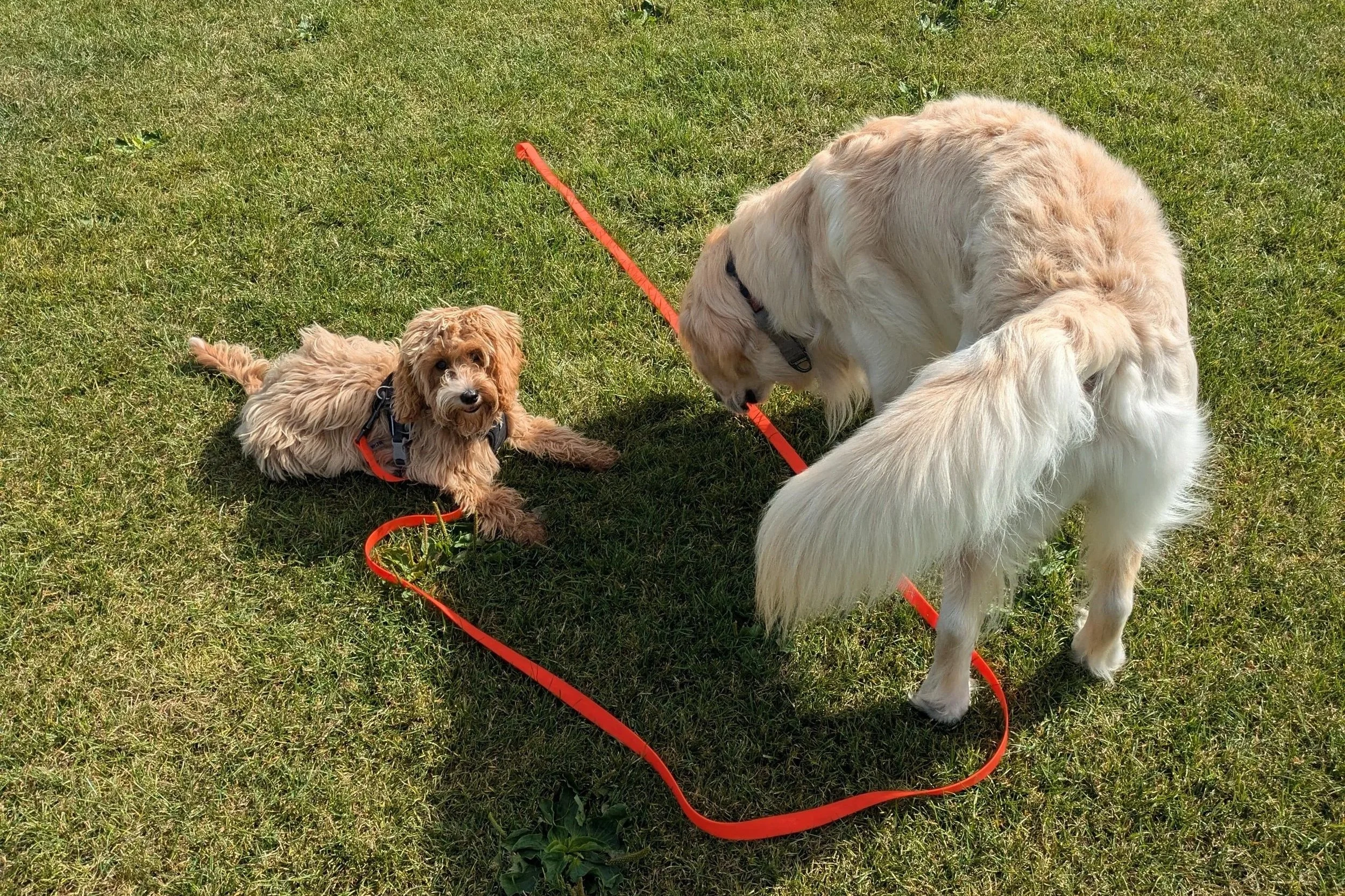
Puppy Socialisation: Building Confidence & Calm from Day One
Puppy socialisation isn’t about meeting every dog or person—it’s about helping your puppy feel safe and neutral in the world. Done right, it builds confidence, focus, and calm behaviour that lasts.
Puppy Socialisation: Start From Day One
Socialisation begins the moment your puppy is born. Their early environment—mum, siblings, and the people around them—shapes personality even before they come home with you. By the time puppies arrive at 8–9 weeks, they’ve learned a lot, but often the first month at home is very quiet. No big sounds, no other dogs, little variety—sometimes boredom or unstructured rest and play dominates their day.
Even short, structured experiences make a big difference. From day one, getting your puppy out and about—even for just 10 minutes—helps them stay connected to the outside world. Using a puppy bag is perfect for these outings. It keeps your puppy safe, lets them explore at their own pace, and allows you to gradually introduce them to new sights and sounds. Short, structured trips help your puppy feel confident—book a session to get personalised guidance from day one.
When you step outside—to the park, street, or local green space—socialisation should be purposeful but fun. Focus on:
Loose lead walking – keeping walks positive and stress-free
Recall practice – starting in safe , in controlled spaces like a park using long line, check out your first steps to develop great recall.
Choosing the right dog friends – relaxed, well-behaved dogs with responsive owners make the best early companions
Exposure to different sights, sounds, and environments – teaching your puppy to stay calm and engaged
Socialisation isn’t about meeting every dog or person. It’s about helping your puppy feel safe, confident, and interested in you even when the world is busy. Teaching engagement, calmness, and positive interactions early sets the foundation for a reliable, happy adult dog.
If you want guidance on building these skills from day one, structured and stress-free, get in touch and let’s set your puppy on the right path. Socialisation sets the stage for a calm, focused dog— book a session and let’s get started together.
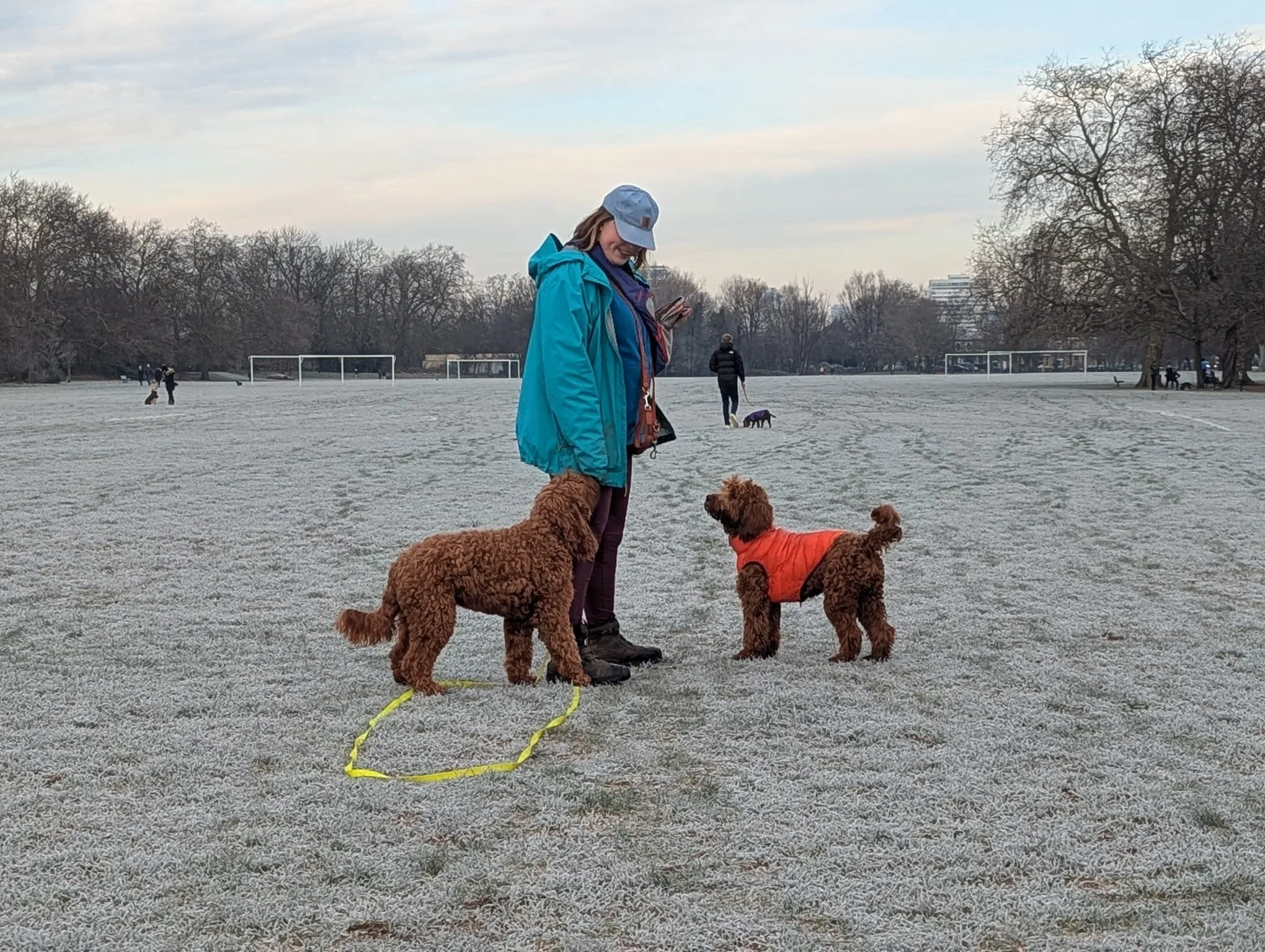
Loose Lead Walking: Step-by-Step Exercise for Building Calm, Focused Walks
Walking your puppy (or adult dog) can quickly turn stressful when they pull ahead or get distracted. Loose lead walking isn’t about strict control—it’s about engagement, focus, and building a habit your dog enjoys. Here’s a simple step-by-step approach that works, even in busy areas like Wandsworth Common.
Step 1: Build Attention With Backward Walking
One of the most effective exercises is walking backwards. The trick is to vary your pace:
Slow backward steps – helps your dog notice your movements
Quick backward steps – encourages them to catch up without pulling
Mix speeds randomly – keeps them attentive and engaged
Every time your dog’s front paws reach your knees:
Reward immediately with your marker word, “yes!”
When you turn slightly sideways, move the reward to guide your dog next to you
This teaches your dog to focus on you, follow your movements, and settle into the correct position next to you. You can even practise this during mealtimes or short sessions at home. It works for both puppies and adult dogs.
Step 2: Add the Lead
Once your dog understands backward walking:
Pick up the lead, keeping it slack
Walk backwards, varying your pace as before
Reward when your dog stays next to you or slightly in front
Use side turns to encourage your dog to settle into the correct position beside you
You can also mix in direction changes or sideways walking, but always keep the focus on:
Dog position next to you
Slack lead
Attention on you
This reinforces the loose lead habit while keeping training positive.
Step 3: Reinforce Forward Walking
After mastering backward drills, move forward while keeping your dog in the correct position:
Speed up and slow down randomly
Reward when your dog stays close
Stop or change direction if they start to pull
This keeps your dog engaged and prevents pulling habits from creeping back in. Practising loose lead walking works best with hands-on guidance— book a session to get personalised tips.
Why This Helps
Varying pace, walking backward, turning sideways, and rewarding attention:
Teaches dogs to watch and respond to you
Builds impulse control
Strengthens the loose-lead habit
Walking calmly on a loose lead works best when your puppy is confident and relaxed in new environments—learn how to build that foundation in our Puppy Socialisation guide.